Anti-AI Crafting: How Human-Made Design is Becoming the New Competitive Edge in 2026

The Saturation Problem: Why Algorithmic Perfection Became a Liability
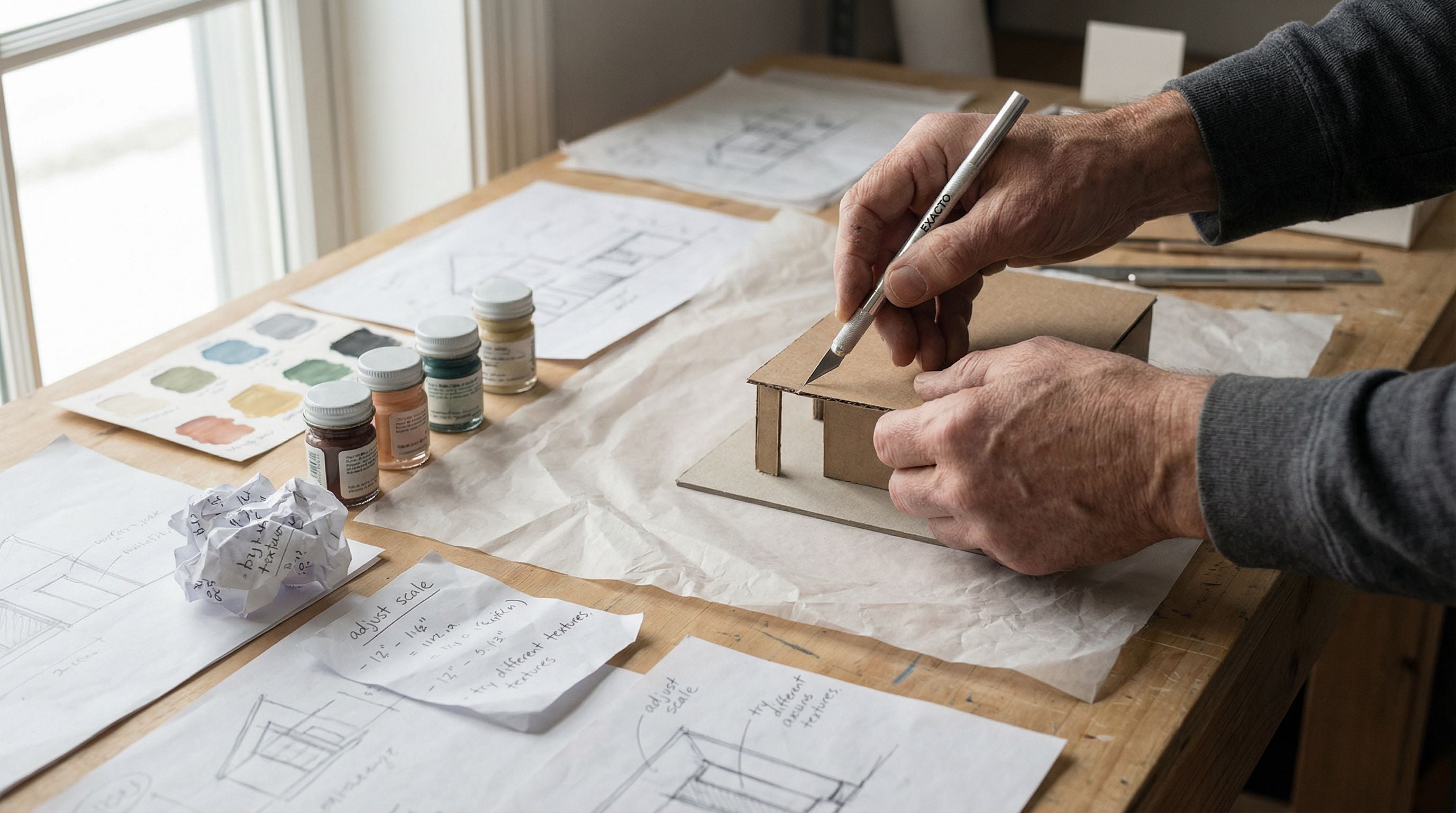
We've hit an inflection point in 2026. Open any creative platform, scroll through social media, or visit brand websites and you'll see the same problem everywhere: AI-generated work has become so ubiquitous that perfection now signals artificiality. The hyper-polished, algorithmically-smoothed aesthetic—once aspirational—is now a mark of mediocrity.
According to Texture, warmth and tactile rebellion: the big graphic design trends for 2026, Graham Sykes, global executive creative director at Landor, captured this perfectly: "when algorithms flood the world with flawless flatness, the marks of the maker become signal." That's the core insight driving design in 2026. Audiences have developed an almost instinctive radar for authenticity. They can feel the difference between something made by human hands and something optimized by a model.
This isn't about rejecting technology entirely. It's about recognizing that in an attention economy flooded with algorithmic sameness, differentiation comes from what makes your work unmistakably human. Visible imperfections, hand-built elements, tactile surfaces, analog touches—these aren't flaws anymore. They're proof of authorship.
The brands winning right now understand something crucial: your audience doesn't want perfection. They want authenticity. They want to feel the presence of a real person behind the work.
The Hybrid Workflow: Using AI as a Tool, Not a Replacement
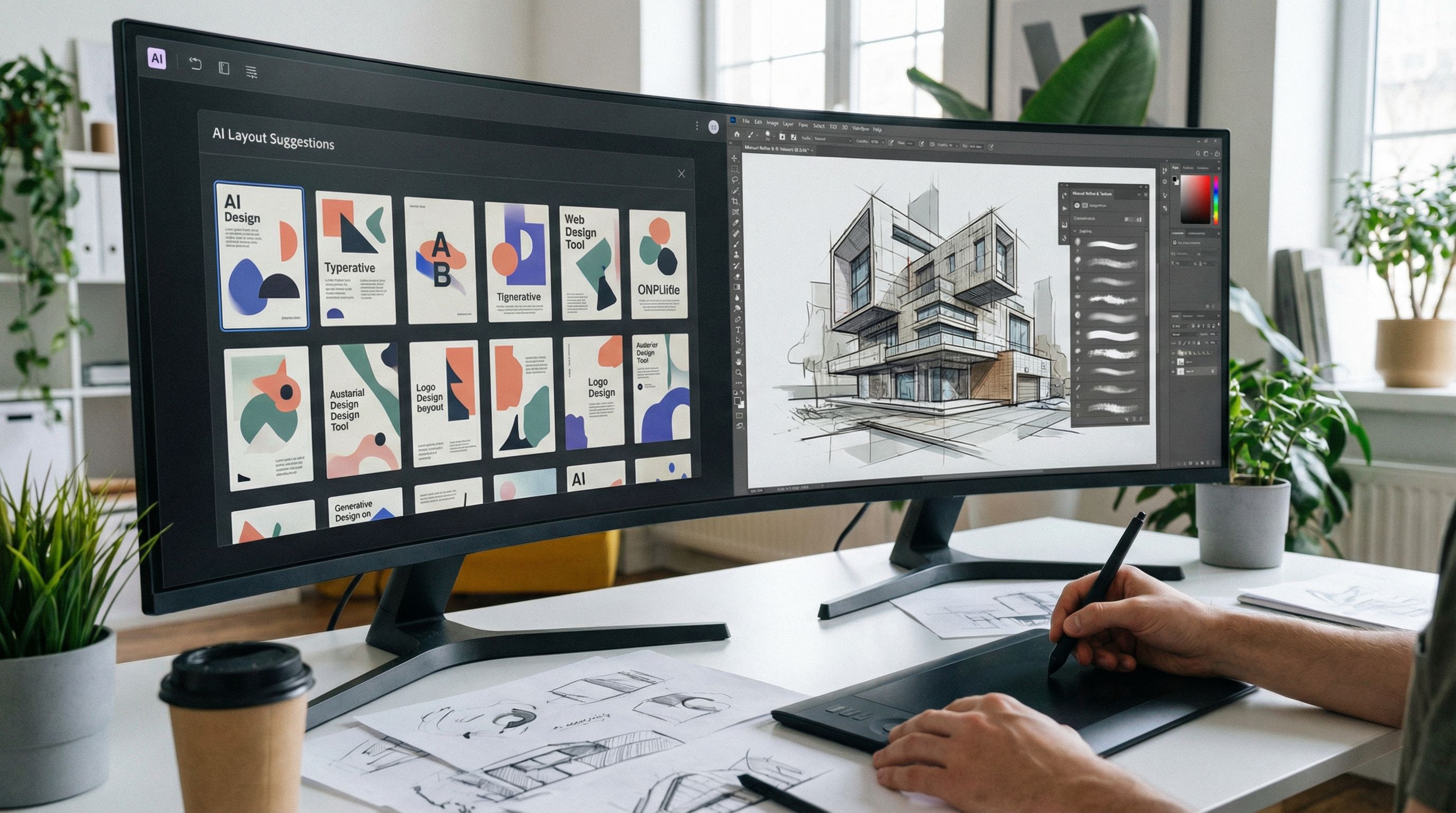
Here's where the narrative gets more nuanced. The answer to AI isn't to abandon it—it's to fundamentally change how you use it. In 2026, the most sophisticated design teams aren't anti-technology; they're pro-intentionality. They're adopting what's increasingly called "hybrid creative workflows" where AI handles specific tasks under human creative direction.
According to The Big Shift: 2025 Graphic Design Trends Every Brand Needs to Know, this workflow looks like: AI as a research and drafting tool, with human designers maintaining creative control and brand voice. Think of it this way—AI is your exploration partner, not your finisher.
Here's what this actually means in practice. Use AI to rapidly generate layout variations, explore color combinations, or batch-produce initial concepts. Use it to speed up repetitive tasks like resizing assets or generating variations of a design system. But keep humans in the loop for the decisions that matter: refinement, texture application, strategic revisions, and final execution. The human hand should be visible in the final work.
This isn't about slowing down your production. Done right, a hybrid workflow actually accelerates your process. You're leveraging machine speed for the exploratory phase while preserving human craft for the output. You get the efficiency of algorithms without sacrificing authenticity. It's the best of both systems working in sequence, not competition.
Crafting the Unmistakably Human: Texture, Motion, and Tangible Details

So what does anti-AI design actually look like? It starts with texture and materiality. In 2026, smooth, digital-native aesthetics are being deliberately rejected in favor of surfaces that feel made. Hand-stitched textures, visible grain, brush strokes that show variation, distressed edges, analog overlays—these elements signal that a human spent time with the work.
But it's not just static texture. Texture, warmth and tactile rebellion: the big graphic design trends for 2026 also highlights how motion has become central to differentiating human-crafted work. Micro-interactions, animated brand marks, and subtle transitions aren't add-ons anymore—they're core identity elements. When Jane Lee, junior creative tech at Interstate, notes that "audiences expect visuals that react, evolve, and feel alive," she's describing something AI often struggles with: intentional, purposeful animation that feels human rather than procedural.
Here's a practical framework for building anti-AI design into your brand work:
In typography: Choose typefaces with personality—maybe something with irregular letterforms or visible construction. Pair them with hand-lettering or custom forms for key headlines. Vary your scale and weight in ways that feel deliberate rather than algorithmic.
In color: Avoid the "AI safe palette" of muted, calculated combinations. Push into unexpected color relationships. Use weathered, complex color palettes that feel discovered rather than generated. Let colors feel slightly imperfect—slightly too saturated, slightly too warm.
In layout: Introduce intentional asymmetry and breathing room. Let elements feel placed by a human eye rather than perfectly gridded. Use negative space strategically—sometimes generously, sometimes cramped in ways that create visual tension.
In imagery: Layer textures over photographs. Add hand-drawn elements, annotations, or visible overlays. Show the process, not just the product. Imperfect crops, visible framing, slight rotations—these signal human decision-making.
Data-Driven Authenticity: Personalization Without Losing Human Touch
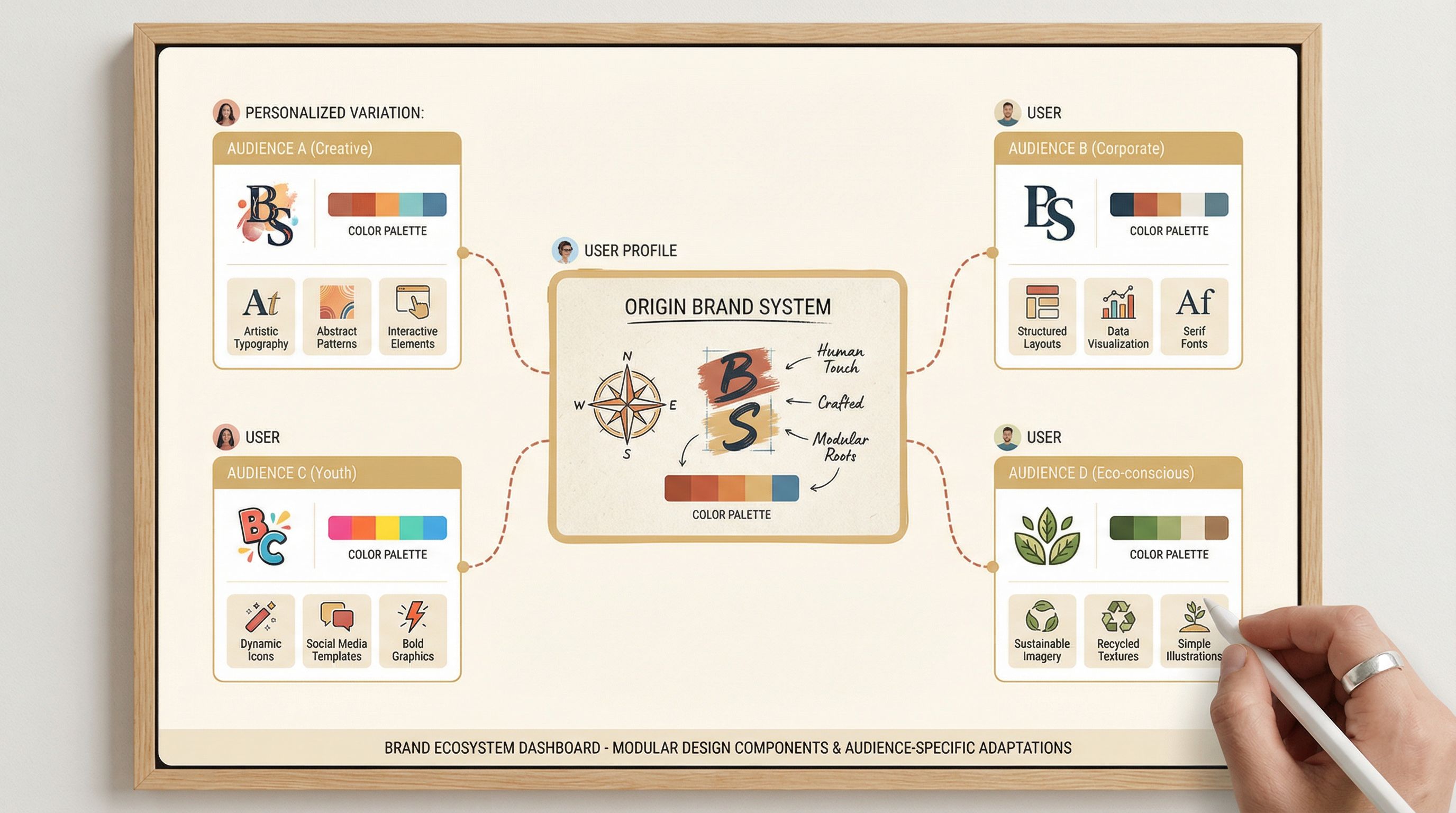
One of the biggest misconceptions about anti-AI crafting is that it's incompatible with scale and personalization. It's not. In fact, some of the most innovative brands in 2026 are combining hyper-personalized creative with unmistakably human design systems.
Here's how it works: You build a modular design system with human-crafted components—distinctive color palettes, custom typography, textured elements, motion principles. Then you feed these components into your creative management platform to generate personalized variations for different audiences, behaviors, locations, or even real-time data like weather. The framework is human. The scalability is algorithmic. The result feels authentic because it's built on human creative decisions, not algorithmic defaults.
According to The Big Shift: 2025 Graphic Design Trends Every Brand Needs to Know, this approach—treating design as a measurable experiment—is increasingly standard in high-performing campaigns. But the key is that your baseline system has to be strong enough to maintain voice and consistency even as it scales.
This means designing with intention. Every color choice, every typographic decision, every texture should communicate something about your brand that an algorithm couldn't decide for you. When you personalize from that foundation, you're not diluting authenticity—you're amplifying it at scale.
The brands winning here have flipped their process: instead of "How can we use AI to make custom variations?" they're asking "How do we build a human-crafted system that scales intelligently?" That reframing changes everything.
Building Trust Through Intentional Imperfection
Here's what's shifted in the designer-client conversation around 2026: authenticity has ROI. It's no longer a soft value. Clients understand—sometimes better than we do—that genuine, human-centered creative builds trust and connection in ways algorithmic perfection simply cannot.
As noted in Trends of 2025: The year in AI, Getty Images identified a key shift: "AI + Human Values—AI surged, but consumers still expect real, unmodified photos." This insight extends beyond photography into all visual design. Audiences have developed standards for authenticity. They can tell the difference between work made by a person and work optimized by a model. And increasingly, they prefer the former.
This creates an opportunity for designers who can articulate the value of human creativity. You're not working slower or less efficiently—you're working more strategically. You're building design systems that communicate your brand's actual values, not algorithmic approximations of them.
The tactical shift here is subtle but powerful. When you're designing, ask yourself: Does this look intentional? Not "Is this perfect?" Intentional design can be rough. It can have visible marks. It can break rules. But it has to feel like someone made a choice.
This is where motion becomes such a powerful tool. A perfectly smooth animation feels algorithmic. An animation with subtle imperfections, variable timing, or unexpected pauses feels human. The micro-interactions feel alive because they feel decided.
As you build work for 2026, remember that your job isn't to compete with algorithms on smoothness. You can't win that game. Your job is to bring something algorithms can't: intentional vision, value-driven decision making, and authentic human perspective. That's what clients actually need, and that's what audiences actually want.
Your 2026 Action Plan: Making Anti-AI Crafting Work for Your Brand

If you're ready to shift your practice toward anti-AI design, here's where to start. This isn't about abandoning your current tools. It's about being intentional about what you use them for and where you insert human craft.
Audit your current output. Look at your recent work. Does it feel distinctive? Can you see human decision-making? If it looks like it could've been generated, that's your starting point. Ask: what would make this unmistakably human?
Identify where AI serves you best. This is usually exploration, variation generation, and layout assistance. It's not usually final execution or refinement. Be honest about the work AI does well in your specific workflow.
Build a signature texture library. Develop 4-6 proprietary textures, hand-drawn elements, or analog overlays that become part of your visual identity. These become your "maker's marks." They're distinctive, they're reusable, and they signal authenticity.
Introduce intentional imperfection into your design system. Maybe your grid has occasional breaks. Maybe your typography has variable spacing. Maybe your color palette includes slightly unexpected combinations. Build these into your system so they scale consistently.
Invest in motion as a differentiator. If you're not already, start exploring subtle micro-interactions and animated transitions. Motion is one of the strongest signals of human craft—when it's done intentionally.
Document your process. Share sketches, iterations, thinking. This isn't "showing your work"—it's proving your work. Audiences connect with process. They want to see the human decision-making that led to the final design.
The competitive advantage in 2026 isn't about working faster than algorithms. It's about working smarter—using technology to support human creativity while keeping authenticity front and center. The brands that master this hybrid approach, combining algorithmic efficiency with unmistakable human craft, will be the ones that truly stand out.